
Welcome to Global Data Center Hub. Join investors, operators, and innovators reading to stay ahead of the latest trends in the data center sector in developed and emerging markets globally.
TL;DR
NVIDIA disclosed multiple residual value guaranties with SB Energy on August 17, 2026, with an aggregate payment obligation cumulatively capped at $105 billion. The guaranties relate to leases covering approximately 4.25 gigawatts of IT load at the PORTS-Pike Technology Campus in Pike County, Ohio, where OpenAI is the tenant under a 20-year lease. NVIDIA is separately investing $1.5 billion in SB Energy.
The $105 billion figure caps a shortfall, and the guaranteed minimum value that determines what NVIDIA owes is not disclosed anywhere in the public documents. NVIDIA pays the gap between a lease’s guaranteed minimum value and whatever SB Energy recovers through a replacement lease or a sale. The cap binds only where recovery approaches zero.
OpenAI’s agreement to reimburse NVIDIA is triggered by the same insolvency that would make reimbursement uncollectible. The Trigger Events under the guaranties are OpenAI insolvency resulting in a lease default, or OpenAI failing to make lease payments. NVIDIA’s practical recovery is physical control of the leased capacity.
Part One: The Record
NVIDIA disclosed on August 17, 2026, that it had entered into multiple residual value guaranties with SB Energy, with an aggregate payment obligation cumulatively capped at $105 billion.
SB Energy will build, own and operate the data center under a 20-year lease to OpenAI, and NVIDIA will be the exclusive AI compute infrastructure provider at the site.
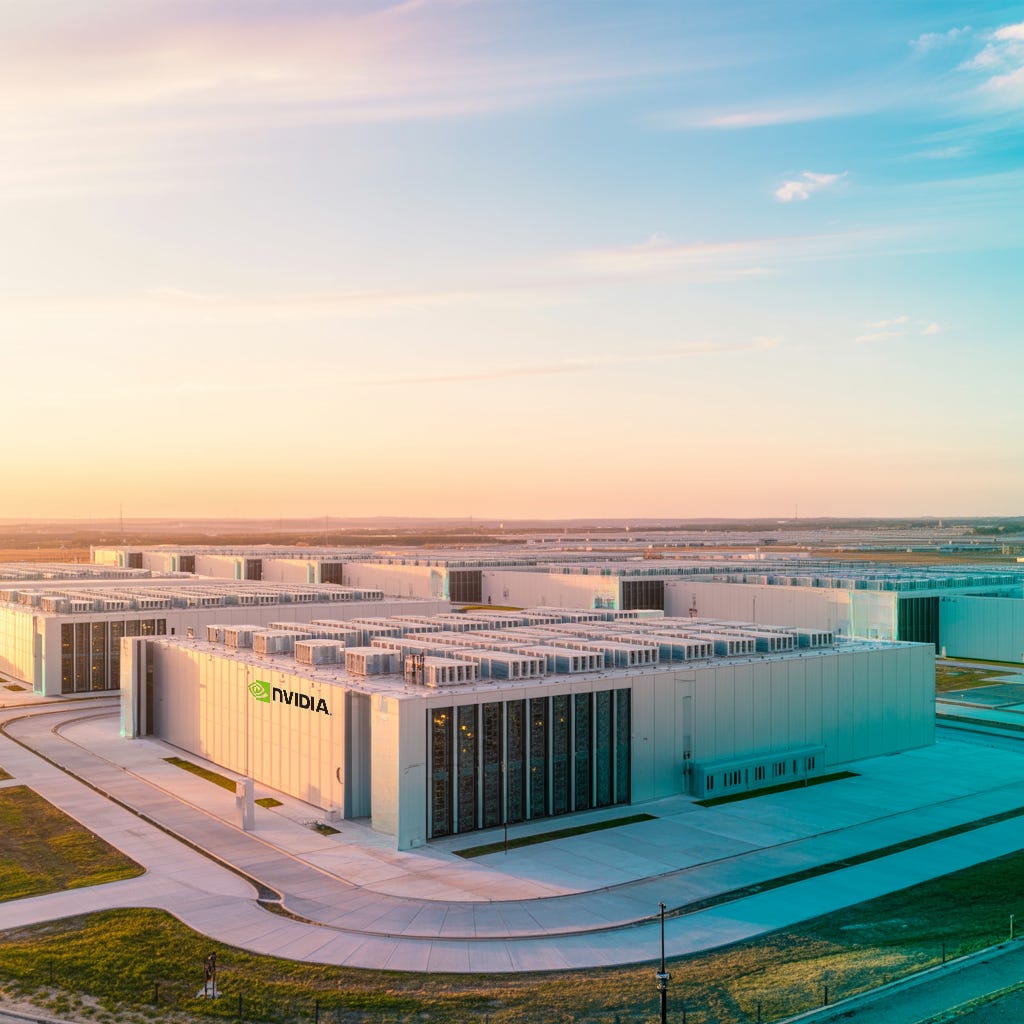
The guaranties relate to leases covering approximately 4.25 gigawatts of IT load at the PORTS-Pike Technology Campus in Pike County, Ohio.
NVIDIA filed the disclosure on a Form 8-K alongside a joint announcement with SB Energy and OpenAI.
The Guarantee Structure And Trigger Conditions
Each guaranty becomes effective when the applicable lease commences, and payment is conditioned on SB Energy satisfying ready-for-service conditions for the relevant premises, expected beginning in 2028.
The filing defines two Trigger Events: OpenAI insolvency resulting in a default under a lease, and OpenAI failing to make payments under a lease.
On a Trigger Event, NVIDIA pays an amount generally equal to any shortfall between the guaranteed minimum value of a lease and amounts recovered through a replacement lease or a sale.
NVIDIA holds five elections on a Trigger Event.
It may assume the lease, require SB Energy to relet the premises, initiate a sale, allow the lease to be terminated, or defer those remedies for up to one year while paying specified project agreement costs.
Obligations end upon the earliest of four events: the 20th lease anniversary, OpenAI’s lease termination, achieving a satisfactory credit rating, or other customary termination events.
OpenAI has agreed to reimburse NVIDIA for amounts paid under the guaranties.
Campus Scale, Power, And Grid Investment
The initial deployment is designed to support 4.25 IT-gigawatts of AI factory capacity.
NVIDIA holds an option to extend credit support to the remaining 3.75 IT-gigawatts, exercisable at its sole discretion.
The 8-K states the option covers approximately 3.8 additional gigawatts.
OpenAI is the customer for 8 IT-gigawatts across the campus.
SB Energy and SoftBank Group will build at least 10 GW of generation for 8 IT GW of capacity and invest at least $4.2 billion in regional grid infrastructure with AEP Ohio to protect ratepayers.
The campus spans private and federal land at the decommissioned Portsmouth Gaseous Diffusion Plant, developed with AEP Ohio, the U.S. Department of Energy and the U.S. Department of Commerce.
OpenAI has committed an incremental $40 million to SB Energy’s existing $40 million community benefits fund.
Equity Investment, Exclusivity, And Advisors
NVIDIA will invest $1.5 billion in SB Energy, joining existing investors SoftBank Group and OpenAI.
The investment is separate from the guaranty obligations.
The site will run NVIDIA’s full-stack DSX AI factory platform, including GPUs, CPUs and networking.
Goldman Sachs and J.P. Morgan served as financial advisors to SB Energy. Morgan Stanley served as financial advisor to NVIDIA.
The planned capacity is expected to come online in phases beginning in 2028.
Part Two: The Read
The Guaranteed Minimum Value Is The Number That Matters
Across 4.25 gigawatts of IT load, the figure that determines what NVIDIA owes is the guaranteed minimum value of each lease, and it appears in none of the public documents.
Coverage since August 17 has carried the $105 billion cap as NVIDIA’s exposure, while the filing describes it as a ceiling on a shortfall.
A lender pricing SB Energy’s project debt off the cap is pricing the top of a gap whose bottom is private, and the bottom decides whether the debt is money good.
The Disclosed Cap Sits Above An Undisclosed Floor
Work through the sequence the filing sets out. OpenAI defaults or becomes insolvent.
SB Energy seeks a replacement lease.
Failing that, SB Energy runs a sale. NVIDIA then pays the difference between the guaranteed minimum value and what those efforts recovered.
The $105 billion is reached only where recovery is close to nothing across every lease in the initial commitment at once.
That makes the cap a poor proxy for exposure in either direction.
Set the minimum value low and the guarantee is thin credit support that will not move a project finance committee. Set it high and NVIDIA has written a lease guarantee under a different name.
The value is fixed lease by lease as each lease commences, so it is not one number. It is a schedule.
The schedule leaks out one lease at a time over the next twelve to twenty-four months.
Before the first lease commences in 2028, the only place the aggregate can surface is NVIDIA’s own contingent liability disclosure.
Whether the company quantifies the guaranteed minimum values or republishes the $105 billion cap is the disclosure event that matters more than the announcement did.
OpenAI Reimburses NVIDIA Only While OpenAI Can Pay
OpenAI has agreed to reimburse NVIDIA for any amount NVIDIA pays under the guaranties.
Read that against the trigger. NVIDIA pays when OpenAI becomes insolvent and defaults, or when OpenAI stops paying rent.
In the first case the reimbursement claim ranks with general unsecured creditors of the entity that just failed. In the second case OpenAI is already missing payments on the same leases.
The indemnity is therefore worth the most where NVIDIA never needs it and the least in the scenario the guarantee was written for. What NVIDIA holds instead is physical.
It can assume the leases and run its own workloads. It can direct the relet. It can force a sale. It can wait a year while paying carrying costs. Those five elections are the recovery.
The equity position points the same way. NVIDIA is putting $1.5 billion into the landlord, not the tenant.
In a distress scenario NVIDIA sits inside the entity that owns the asset it would be paying to protect.
A Credit Rating Can End The Guarantee Early
The guaranty terminates on the earliest of four events, and one of them is OpenAI achieving a satisfactory credit rating.
That gives the credit support a variable life inside a fixed 20-year lease.
A project debt structure sized against the guarantee has to survive it going away years before maturity, at a moment set by a rating agency and a definition of satisfactory that sits in documents nobody outside the deal has read.
The direction depends on why the rating arrives. A rating that reflects genuine cash generation at OpenAI replaces NVIDIA’s support with something better.
A rating earned partly because the leases look creditworthy while NVIDIA stands behind them is circular, and it removes the support that produced it.
Watch the covenant package on SB Energy’s first project financing. If lenders accept a structure that steps down when the guaranty terminates, they have underwritten OpenAI.
If they demand replacement credit support at termination, they have priced the risk correctly and NVIDIA’s exit is narrower than the filing implies.

What Each Desk Prices Before The First Lease Commences
Private Capital. Underwriters of SB Energy debt or equity should get three items in writing: the minimum value schedule by lease, the definition of satisfactory credit, and whether OpenAI’s reimbursement obligation is secured.
Firms that price off the cap instead will inherit the template the first executed financing sets, written to clear that deal.
Public Markets. NVIDIA’s contingent exposure sits in a footnote rather than on the balance sheet, and it grows as each lease commences.
Five-year credit default swaps stood at 80.77 basis points on August 18, per a secondary report citing Mott Capital, up from 72.11 basis points on August 11 after Jensen Huang clarified the earlier support framework.
Holders waiting for a quantified liability hold a position whose contingent exposures compound before they are measured.
Operators. The guarantee came attached to exclusivity. NVIDIA is the exclusive AI compute infrastructure provider at the campus and holds equity in the landlord.
Developers competing for frontier lab tenants now compete against landlords carrying vendor credit support, and the price of that support is control of the silicon.
Operators who want those terms should decide what they will give up before a competitor sets the rate.
The Unexercised Option Is The Disclosure To Watch
NVIDIA guaranteed 4.25 IT-gigawatts and took an option on the other 3.75.
That option is the cleanest statement NVIDIA has made about how it values this risk, because it costs nothing to hold and everything to exercise.
A company certain of the residual value of purpose-built AI capacity would have taken the full campus at signing.
The first leases commence in 2028. Between now and then the guaranteed minimum values get set and the project debt gets structured.
The question for the next four quarters is whether NVIDIA exercises before the first building is delivered or after.
Exercising early says the residual value case is proven.
Waiting says NVIDIA wants to see a building relet before doubling the exposure, which is what every lender here should want to see.