
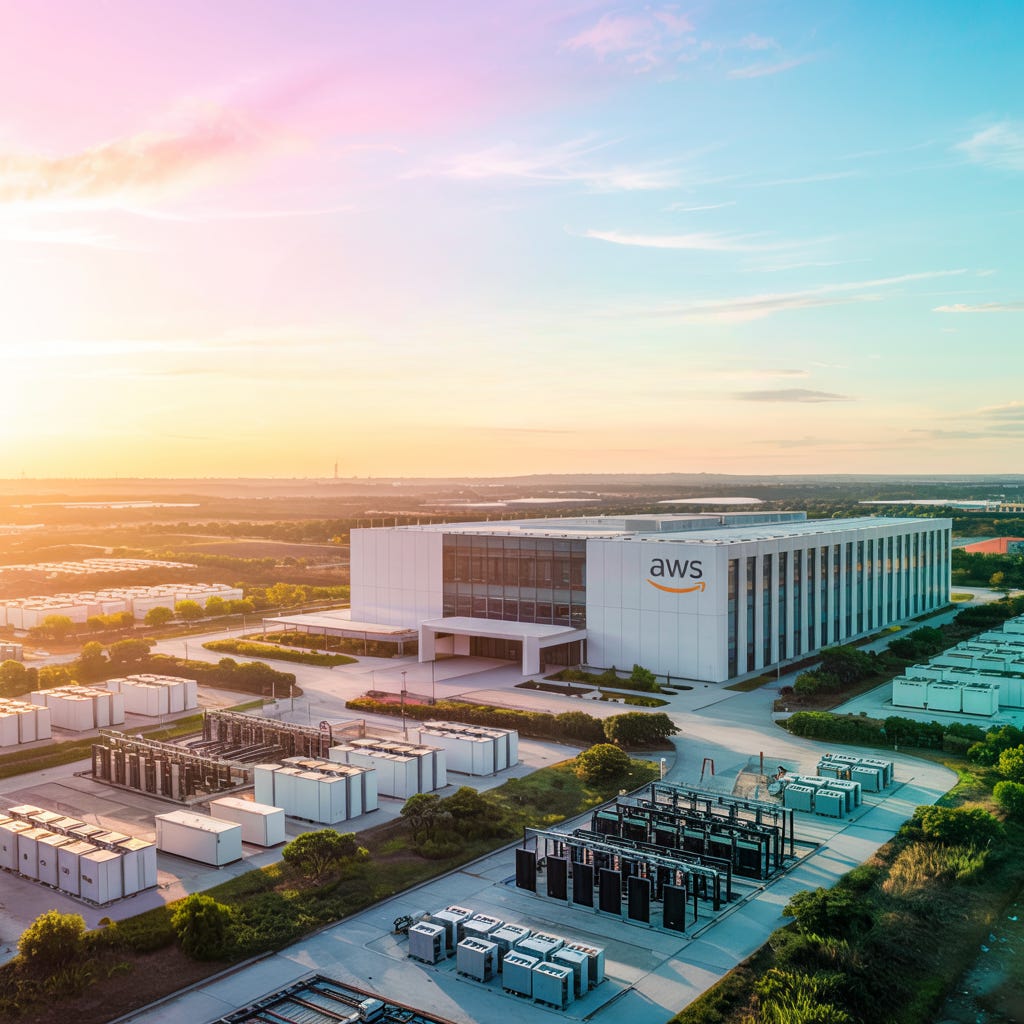
This article is the 2nd article in the series: The Compute Factory: A Free 11-Part Series on Who Owns the Means of AI Production
Welcome to Global Data Center Hub. Join investors, operators, and innovators reading to stay ahead of the latest trends in the data center sector in developed and emerging markets globally.
The Document That Started It
In 2003, a senior Amazon engineer named Benjamin Black wrote a two-page internal document. Amazon’s retail infrastructure had tripled in three years. Every engineering team was building its own servers from scratch. Every product launch required weeks of provisioning time. The bottleneck was access, not capacity.
Black’s document proposed something beyond the internal brief. He described a standardized infrastructure service Amazon could operate internally and eventually sell externally. Compute provisioned on demand. Billed by the hour. Accessible through a simple interface. Andy Jassy read it and recognized immediately what it was.
On August 25, 2006, Amazon launched the Elastic Compute Cloud EC2 into public beta. The price was ten cents per compute hour.
What the Previous Factory Actually Cost
IBM Built the Factory. The Market Built a Different One. established the pattern: the entity that owns the means of compute production captures the returns. The mainframe concentrated those returns inside IBM. The client-server transition distributed factory ownership to the enterprise. Each company owned its servers, managed its own uptime, and absorbed its own inefficiency.
That inefficiency had a specific shape by the early 2000s. Servers provisioned for peak demand ran at roughly 15% to 20% average utilization across the year. Capital commitment preceded utilization by months. A startup needing compute capacity for a product launch had to purchase permanent infrastructure to access temporary output. An enterprise managing seasonal traffic peaks owned hardware that sat idle for forty weeks to serve twelve.
The factory was productive. The ownership model was the inefficiency.
The Utility Insight
What Black’s document recognized was straightforward. Compute was stranded, not scarce. Every enterprise owned more capacity than it used. Every startup needed more than it could afford to buy. The gap between stranded supply and constrained demand existed because ownership required capital commitment before utilization was known.
The utility model closed that gap. Amazon would own the infrastructure. Everyone else would lease access by the hour. Capital commitment would follow utilization rather than precede it.
Electricity, water, and telephony had all followed this same transition a century earlier from private ownership of distributed generation to centralized utility provision, with access sold by the unit. EC2 applied utility economics to compute infrastructure. The implications for factory ownership, and for who captured the returns, were permanent.
The Factory Shifts Hands
Here is the structural fact that most coverage of the cloud era underweights.
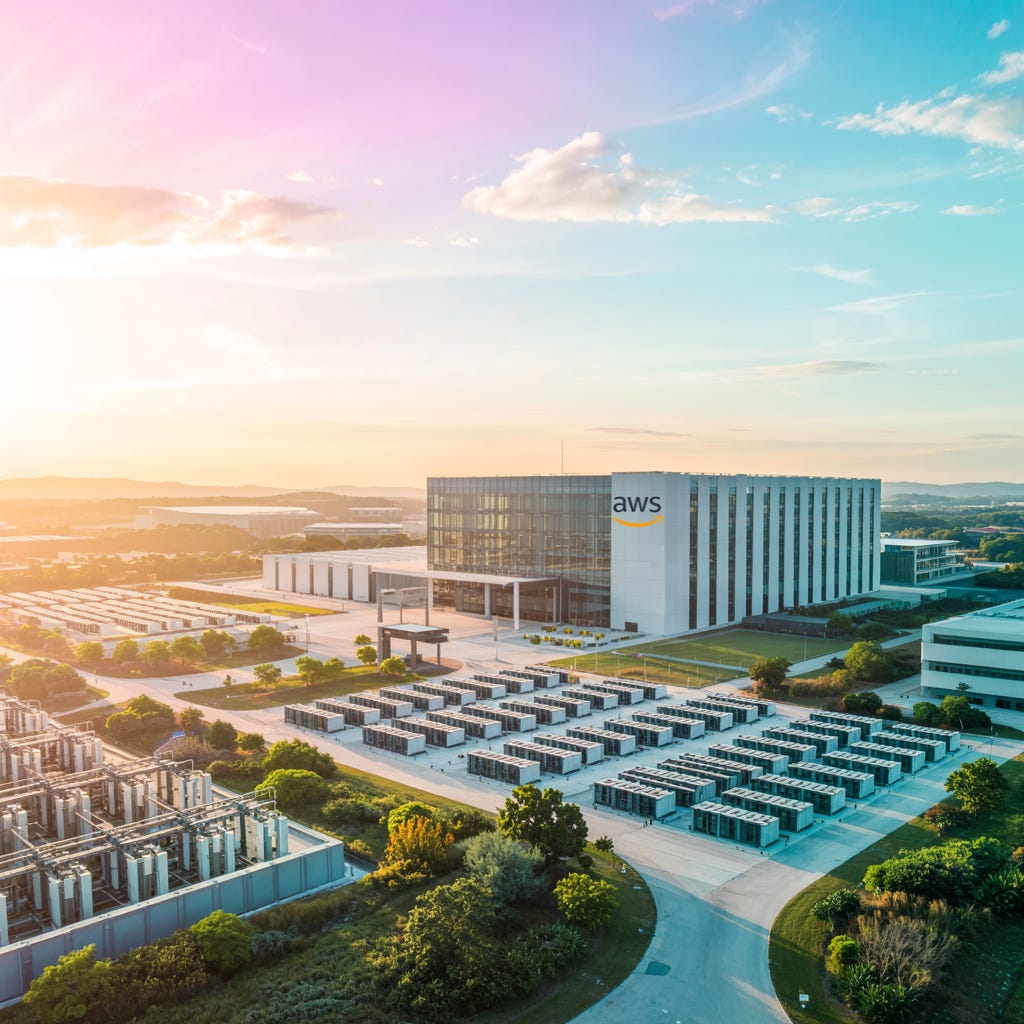
EC2 transferred factory ownership from tens of thousands of enterprises to a small number of hyperscale operators. The distributed ownership of the client-server era corporate data centers running independently across every industry consolidated into facilities operating at a scale, power density, and capital intensity that made meaningful competition structurally difficult for any operator arriving later.
Amazon, at EC2’s launch, had spent years building compute infrastructure at a scale no single enterprise could justify for its own workloads. The purchasing leverage on hardware, the engineering depth on operational tooling, the utilization rates achievable by aggregating demand across thousands of customers — these produced a cost structure that made enterprise-owned infrastructure difficult to defend for any workload that did not require physical proximity or proprietary control.
The client-server factory was bypassed entirely. The same workload, served at lower unit cost, from infrastructure the enterprise no longer needed to own.
AWS generated $27 billion in operating income in 2023. The business produced negligible revenue at its 2006 launch. That trajectory is the financial signature of a factory ownership transfer and the capital that recognized it early captured returns the capital that arrived late is still trying to close.
What the Narrative Missed
The framing that formed around EC2 emphasized democratization: compute access extended to startups and developers who could not previously afford infrastructure. That framing was accurate at the access layer. It was incomplete at the infrastructure layer.
Access was distributed. Ownership was consolidated. The two outcomes were the same transition expressed at different altitudes in the value chain. A startup leasing EC2 hours was accessing compute it could not previously afford and simultaneously deepening its dependence on infrastructure owned by a single operator running at a scale it could never replicate.
You should evaluate that dynamic carefully when assessing any new compute model that frames access as its primary value proposition. Access economics and ownership economics are different questions. The transition premium accumulates at the ownership layer. It always has.
Three Positions on the Transfer
For colocation operators who had spent the 1990s building capacity to house enterprise server infrastructure, EC2’s launch began a workload retention problem that took a decade to fully surface. Enterprise IT budgets migrated from capital expenditure to operating expenditure. Server refresh cycles lengthened. Tenant footprints shrank. The binding constraint shifted from physical capacity to customer retention against an operator whose cost-per-unit the colocation model could not match.
For infrastructure investors evaluating the hyperscale operators directly, EC2 established a return profile that would define the sector for two decades. The capital intensity of hyperscale infrastructure land, power, fiber, and continuous hardware refresh created a durable barrier to entry. Utilization rates achievable by aggregating demand across thousands of customers produced occupancy economics that enterprise-owned facilities could not replicate. The early-positioned operators captured those economics. Late capital is still paying the entry premium.
For public equity investors, the transition was visible in Amazon’s financial statements years before consensus recognized it. AWS operating margins, disclosed separately for the first time in 2015, revealed a business generating returns that bore no relationship to the retail operation that had obscured it. The market had priced Amazon as a retailer with a cloud division attached. The disclosure revealed a cloud business with a retail operation attached. The re-rating was a correction, not a revision. The factory’s returns had been accumulating in plain sight.
The Question EC2 Left Open
Sun Microsystems adopted its tagline in 1984: the network is the computer. EC2 proved the tagline correct in a way Sun had not anticipated. The logical endpoint of distributed computing was a utility accessed through a network infrastructure the enterprise neither owned nor managed.
The factory ownership had moved. The binding constraint had migrated from provisioning timelines to network access and API design. The returns had concentrated into a small number of hands at a scale that made the client-server transition premium look modest.
The question EC2 left open was whether the operators who built the cloud factory would continue to set the terms of access. By 2009, a team inside Facebook was beginning to suspect the hardware the hyperscalers were buying was itself the next inefficiency. What they built in response changed who controls the factory’s design and how deeply that control compounds over time.
Part 3 examines the hardware moat Facebook built and then gave away: Open Compute Project — The Hardware Moat Facebook Built and Gave Away
You missed the co-author of the white paper Chris Pinkham who Ben worked for and went on to set up shop in his native South Africa to build it all.
Excellent breakdown of how AWS EC2 didn’t just reduce costs, it fundamentally shifted infrastructure from a capital allocation problem to a real-time optimization problem. The key insight is that elasticity isn’t a feature, it’s the core economic primitive driving cloud dominance. This reframing is still underappreciated by many investors analyzing data center assets.