
Welcome to Global Data Center Hub. Join investors, operators, and innovators reading to stay ahead of the latest trends in the data center sector in developed and emerging markets globally.
TL;DR
Saudi Arabia’s LEAP 2026 closed with nearly $15 billion in announcements, investments and agreements. The fifth edition of the conference ran from August 31 to September 3, 2026 at the Riyadh Exhibition and Convention Center in Malham. The total spans AI infrastructure, data centers, cloud, manufacturing, venture capital and skills programs.
HUMAIN, the artificial intelligence company owned by Saudi Arabia’s Public Investment Fund, anchored the largest infrastructure commitments at LEAP 2026. These include a 250 megawatt phase with AMD and Cisco beginning in 2027, a planned 250 megawatt facility with Together AI, and 100 megawatts inside DataVolt’s campus at Oxagon in NEOM. A separate vehicle managed by BSF Capital is targeting an initial $2.5 billion to finance 250 megawatts being built with Al Moammar Information Systems.
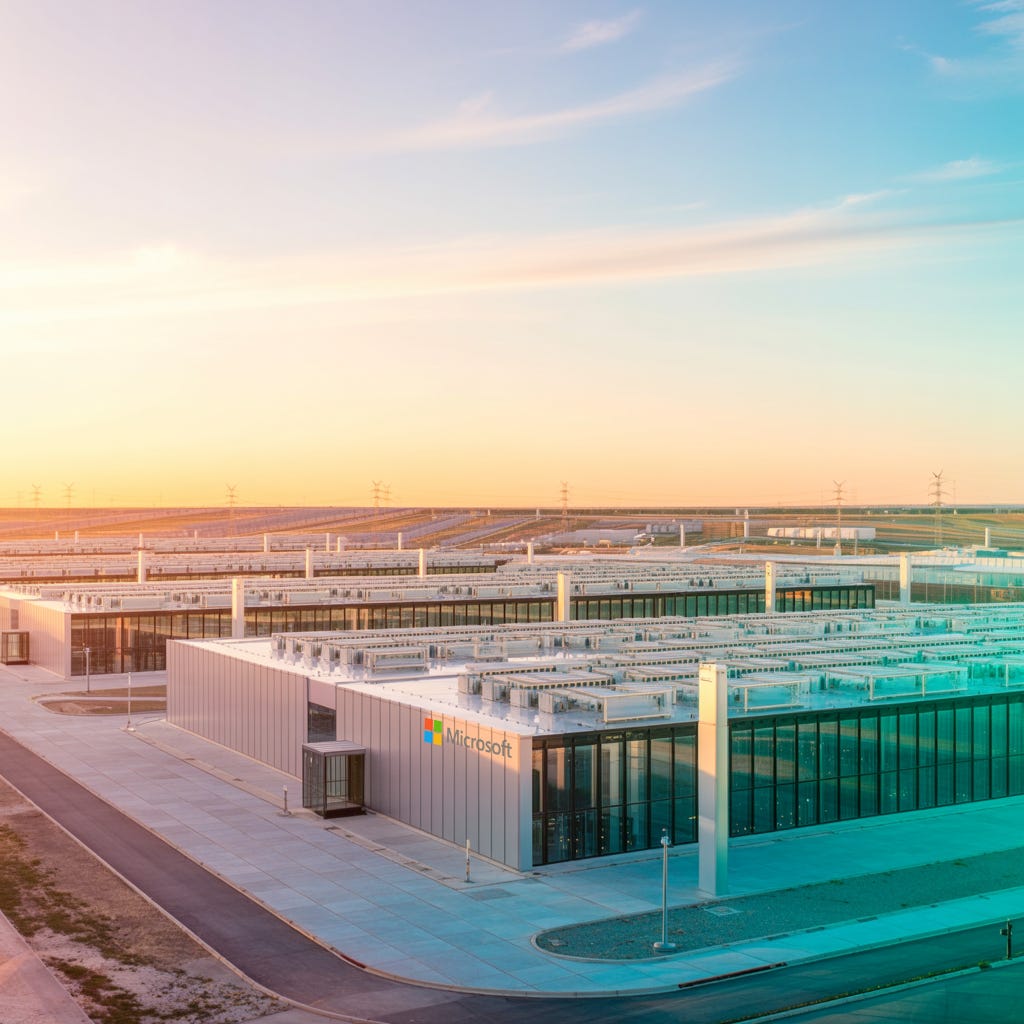
Microsoft opens its Saudi Arabia East cloud region in November 2026 and AWS opens its Saudi region in December 2026, placing two hyperscaler regions in the Kingdom within roughly thirty days. AWS reports more than $5.3 billion of planned investment in the region and has committed with HUMAIN to deliver up to 50 megawatts inside a dedicated AI zone by 2028.
What LEAP Is
LEAP is Saudi Arabia’s national technology conference. It is held once a year in Riyadh, and the 2026 edition was the fifth. It ran for four days, from August 31 to September 3, 2026, at the Riyadh Exhibition and Convention Center in Malham. The theme was “Into New Worlds.”
Four bodies organize it. The Ministry of Communications and Information Technology leads. It works with the Saudi Federation for Cybersecurity, Programming and Drones, an events company called Tahaluf, and the Events Investment Fund.
LEAP is not a trade show that happens to be in Saudi Arabia. It is a government event, and the government uses it as a release window. Saudi ministries, state-backed companies and their foreign partners hold their news until LEAP week and then publish it together. Global vendors do the same. A launch announced at LEAP reaches Saudi buyers and the Saudi state at the same moment.
So one week in Riyadh sets much of the year’s Saudi technology news. The 2026 edition produced nearly $15 billion in announcements, investments and agreements. That money covers AI infrastructure, data centers and cloud. It also covers manufacturing, venture capital and skills.
Why LEAP Matters to the Global Data Center Sector
Most readers of this publication will never attend LEAP. It still shapes the market they invest in, for four reasons.
It is one of the few places where power arrives with the project. In most large markets a developer buys land first. Then the developer joins a waiting list for a grid connection. The wait sets the schedule. Saudi Arabia is trying to run those steps at the same time.
At LEAP 2026, the national grid operator and the state electricity developer signed agreements directly with data center companies. Those agreements cover electricity supply, substation design and the regulatory work behind both. None of them is binding. None named a connection date. But the power talks happened in public, in the same week as the buildings.
It sits between three continents. Saudi Arabia is close to Europe, Asia and Africa at once. The subsea cables that carry internet traffic between them already pass nearby. One deal at LEAP 2026 made this concrete. Saudi infrastructure investor Vision Invest and the Africa Finance Corporation put $300 million into WIOCC Group. WIOCC builds data centers, land fiber and subsea cable across Africa. Saudi capital is not only building at home. It is buying the routes.
It is a rare multi-vendor market. Saudi platforms now run AMD accelerators, NVIDIA accelerators, Amazon Trainium chips, Groq inference hardware and xAI systems. Few markets run more than one or two at scale. So the Kingdom is a live test. Can buyers really move work from one chip vendor to another? Or does the software hold them in place? The answer matters far beyond Saudi Arabia.
Two hyperscaler cloud regions open there within about a month of each other. Microsoft in November 2026 and AWS in December 2026. For companies that must keep data inside the country, the choice goes from none to two in a single quarter.
There is a difference between money announced and capacity delivered. It is the same difference as between a mortgage pre-approval and a set of keys. A pre-approval tells you a lender is willing. It does not tell you the sale closed, the house exists, or anyone has moved in. That distinction runs through everything below.
Key Takeaways and Observations
The customers named at LEAP 2026 were not only American. NAVER Cloud and BytePlus were named as the first anchor tenants at Khuzam Digital Valley. BytePlus is also placing its first Middle East and Africa public cloud region inside Mobily’s estate. Together AI brings open-model demand from outside the region.
So Saudi Arabia is not simply hosting American hyperscalers behind a local label. It is selling the same shells to Asian platforms as well. That widens the pool of tenants available to fill the megawatts, and it matters more than any single capital figure announced that week.
Announced capacity is far ahead of operating capacity, and the gap is now measurable. HUMAIN launched its NVIDIA cloud with 1.1 megawatts running. Utilization was above 90 percent. The target is 35.1 megawatts by 2027. In the same week the same company put its name to a 250 megawatt phase with AMD and Cisco, a 250 megawatt initial build with center3, a planned 250 megawatt facility with
Together AI, and 100 megawatts at Oxagon. Two separate frameworks carry one gigawatt targets. The live number and the target numbers are three orders of magnitude apart. That is not a criticism. It is the right place to start. The categories that matter are operational load, energized but empty, contracted, under construction, land and power pipeline, and aspiration.
One company now sits in the middle of nearly everything. HUMAIN signed multiple agreements at LEAP 2026 (AMD and Cisco venture, NVIDIA cloud, Together AI partnership, center3 capacity, Oxagon phase, AWS AI zone, proposed BSF Capital fund, national grid agreement. xAI deployment). HUMAIN buys silicon, develops sites, gathers demand, distributes cloud and arranges power. The upside is speed. One party can move land, chips, customers and electricity together. The risk is concentration. A single state-backed orchestrator carries the execution risk for the whole program.
Power moved from subtext to signed paper, but not yet to firm delivery. Three agreements addressed electricity directly. National Grid SA agreed with HUMAIN on supply for a Riyadh project. The Saudi Electricity Project Development Company agreed with center3 on feasibility studies and substation design. The same developer signed a memorandum with Huawei on energy solutions.
Financing is starting to move off sponsor balance sheets. Two items point the same way. The proposed BSF Capital vehicle would bring outside debt and equity into 250 megawatts of Saudi capacity. It could scale toward one gigawatt. It still needs regulatory approval. The WIOCC subscription is a signed equity investment by two institutional investors into a working African platform. Neither is large by global standards. Both suggest the market is preparing for outside capital rather than state funding alone.
The open question is whether Saudi AI capacity can pass the tests project finance normally applies. Those tests are contracted revenue, bankable power, fixed-price construction, and some protection against accelerators losing their value.
The most valuable disclosures at LEAP 2026 were dates, not dollars. A launch month for Microsoft. A launch month for AWS. A construction start at Oxagon with first capacity in 2028. AMD capacity from the second half of 2027. Utilization above 90 percent on a live cluster. Groq reported racking 19,000 inference chips in under seven days. These are checkable claims with deadlines attached. That makes them more useful than any capital figure announced the same week.
What did not appear is also information. Google and Oracle disclosed no new Saudi data center build, megawatt commitment or infrastructure investment at LEAP 2026. Qualcomm and HUMAIN launched an AI personal computer, which is an edge device rather than infrastructure. Absence of an announcement is not absence of activity. But for a market promoted this heavily, silence from two major cloud providers is worth noting.
The Data Center and Cloud Developments Announced at LEAP 2026
Below are the infrastructure and cloud developments disclosed at the event. They are ordered by how much they change the delivery picture, not by headline value. Software, device and skills announcements are excluded.
1. AMD, Cisco and HUMAIN put production compute in service and set a 250 megawatt next phase
AMD Instinct MI355X accelerators, AMD EPYC processors and Cisco Silicon One networking are live in Saudi Arabia and serving customers. The companies call it AMD’s largest active inference cluster outside the United States. A further 250 megawatts starts in 2027, using MI400-series accelerators. Capacity is expected from the second half of that year. The joint venture target remains one gigawatt by 2030. No new capital figure was disclosed. [Read here]
2. AWS confirms a December 2026 Saudi region and a 50 megawatt AI zone
AWS said its first Saudi infrastructure region remains on track for December 2026. The region represents more than $5.3 billion, or SAR19.88 billion, of planned investment. AWS and HUMAIN also committed to deliver up to 50 megawatts in the first Saudi AI zone by 2028, combining AWS Trainium chips with NVIDIA hardware. HUMAIN’s ALLAM model is slated for Amazon Bedrock, and HUMAIN Fabric for AWS Marketplace. The launch month and the 50 megawatt target are the new information. [Read here]
3. Microsoft dates its Saudi Arabia East region to November 2026
Microsoft confirmed that Saudi Arabia East becomes available in November 2026. The region sits in the Eastern Province and holds three Azure availability zones. It offers in-country data residency, high availability and lower latency. Construction across all three sites finished in 2024. This is a launch date, not a new build. No megawatt or capital figure was disclosed. [Read here]
4. HUMAIN launches an NVIDIA-powered cloud at 1.1 megawatts and above 90 percent utilization
HUMAIN brought a locally hosted AI cloud into service on NVIDIA HGX B300 Blackwell Ultra systems. It reported 1.1 megawatts of operational infrastructure and utilization above 90 percent. The target is 35.1 megawatts by 2027. The Saudi Ministry of Commerce was named as a customer. This is the clearest operating data point from the event. It also sets the honest baseline against every gigawatt target announced beside it. [Read here]
5. HUMAIN and DataVolt start construction at Oxagon in NEOM
HUMAIN will develop 100 megawatts inside DataVolt’s 360 megawatt first phase at Oxagon. Construction is underway and the first 100 megawatts is anticipated in 2028. The phase sits within a planned 1.5 gigawatt campus designed around renewable power, advanced cooling, high-density racks and subsea connectivity to Europe and Africa. The first phase was previously described as 300 megawatts, so the scope has grown. [Read here]
6. HUMAIN and Together AI plan a 250 megawatt facility tied to global demand
Together AI and HUMAIN announced a partnership. It includes a new 250 megawatt Saudi data center for training and inference. It also includes 55 megawatts of dedicated capacity. The companies forecast more than $5 billion of gross annualized revenue in the first year. That figure is projected revenue. It is not capital spend, equity, debt or contracted backlog. No site, power source, delivery schedule or financing structure was disclosed. [Read here]
7. HUMAIN, stc group and center3 set an initial 250 megawatts with a path to one gigawatt
HUMAIN and stc group deepened cooperation across data centers, connectivity and sales. At the center of it is an initial 250 megawatts of AI-ready capacity, with a longer path toward one gigawatt. center3 brings Saudi colocation and subsea reach. stc brings enterprise distribution. HUMAIN brings demand and compute relationships. The underlying joint venture predates the event. This is a framework and route-to-market update. [Read here]
8. Al Moammar Information Systems commits $1.2 billion toward 192 megawatts
Al Moammar Information Systems announced $1.2 billion to expand its Saudi data centers to 192 megawatts of total operational capacity. This is one of the few genuinely new capital commitments from the event. The official summary gave no locations and no commissioning schedule. It did not split existing megawatts from incremental ones. It did not disclose the mix of debt and equity. [Read here]
9. HUMAIN targets $2.5 billion for a BSF Capital data center fund
HUMAIN was reported to be seeking an initial $2.5 billion from domestic and international investors. The fund would be managed by BSF Capital. It would finance 250 megawatts being built with Al Moammar Information Systems, and could later scale toward one gigawatt, using both debt and equity. It needs regulatory approval first. This is a fundraising plan, not closed capital, and it may cover the same assets as the $1.2 billion program above. [Read here]
10. NHC Innovation launches Khuzam Digital Valley with NAVER Cloud and BytePlus as anchors
NHC Innovation announced a phased data center development at Khuzam Digital Valley. The investment is SAR3.3 billion, or roughly $880 million, and the site scales to 65 megawatts by 2033. NAVER Cloud and BytePlus were named as initial anchor customers. Both are East Asian platforms rather than American hyperscalers, which is the notable part. [Read here]
11. Mobily and BytePlus fund the first BytePlus public cloud region in the Middle East and Africa
Mobily and BytePlus announced a joint investment of $120 million to $150 million. It funds the first BytePlus public cloud region in the Middle East and Africa. The platform combines Mobily’s Saudi data center and network estate with BytePlus cloud, AI and analytics technology. No megawatt figure or ownership split was disclosed. [Read here]
12. WIOCC secures $300 million from Africa Finance Corporation and Vision Invest
WIOCC Group signed a shareholder subscription agreement. The Africa Finance Corporation and Saudi infrastructure investor Vision Invest will provide a combined $300 million. The money is meant to speed up African data center deployment. It also funds terrestrial fiber expansion and subsea network development. The investor split, the valuation and the resulting ownership were not disclosed. Vision Invest is a private Saudi investor. It is not a Public Investment Fund vehicle. [Read here]
13. Saudi power entities sign three enabling agreements with data center developers
Three agreements addressed electricity. National Grid SA is the national grid operator. It agreed with HUMAIN on supply for a Riyadh AI data center project and for future needs. The Saudi Electricity Project Development Company agreed with center3 on early power feasibility studies. That work also covers substation design and regulatory preparation. The same developer signed a separate memorandum with Huawei. That one covers data center projects, digital infrastructure and energy solutions. No value or megawatt figure was disclosed for any of the three. [Read here]
14. alfanar commits $150 million to manufacture data center components locally
alfanar announced $150 million to manufacture data center components inside Saudi Arabia. HPE, Intel and the Ministry of Communications and Information Technology launched a local production initiative alongside it. HPE added storage systems made in the Kingdom. It also formalized alfanar’s role in assembling ready-to-run infrastructure. HPE and Intel announced plans for a Saudi innovation center. This addresses supply chain lead times. It does not add operating capacity. [Read here]
15. Zain KSA and DataVolt sign a nonbinding capacity memorandum
Zain KSA and DataVolt signed a nonbinding memorandum of understanding. The two will explore Saudi data center capacity together. Target users are Zain itself, government bodies, enterprises and cloud providers. The sites would carry high-density AI workloads and use energy-efficient cooling. No capital figure, megawatt figure, site or date was disclosed. The deal widens DataVolt’s pipeline beyond Oxagon. It is not yet an investable commitment. [Read here]
What LEAP 2026 leaves behind is a set of dated commitments that can be checked. Two cloud regions arrive in November and December 2026. AMD capacity follows from the second half of 2027, along with 35.1 megawatts of NVIDIA capacity. AWS delivers up to 50 megawatts and Oxagon delivers its first 100 megawatts by 2028. Khuzam reaches 65 megawatts by 2033.
For the Gulf, the signal is a change in what the market competes on. The contest is no longer announced ambition. It is connected power, named anchor customers, and financing that does not sit on a sponsor balance sheet. Grid planning now surfaces in the same week as the buildings. That is the sequence every power-constrained market has been trying to reach, and this one reached it in public.
Three things travel further than the region. Saudi Arabia runs AMD, NVIDIA, Trainium, Groq and xAI hardware side by side, which makes it a live test of whether AI workloads move between chip vendors or stay put. Its anchor tenants are American and Asian at once, which widens the pool of customers available to any market selling data residency. And Saudi capital is buying African fiber and subsea routes, tying Gulf compute to the traffic that would use it.