

Welcome to Global Data Center Hub. Join investors, operators, and innovators reading to stay ahead of the latest trends in the data center sector in developed and emerging markets globally.
This article is the 11th article in the series: Ground to Grid: A Free 21-Lesson Guide to Mastering Data Center Development
TL;DR
Large power transformers above 50 MVA now run 128 to 160 weeks, which makes procurement the binding constraint on data center delivery. Tier-1 manufacturers ABB, Siemens Energy, Hitachi Energy, and GE Vernova quote 48 to 60 months and hold backlogs into 2030. Tier-2 producers Efacec, SGB-SMIT, and CG Power quote 24 to 36 months, and medium-voltage switchgear runs 44 to 84 weeks.
The manufacturing clock on data center equipment starts at Release to Manufacture, which can sit a full quarter behind the purchase order. A purchase order issued in January with Release to Manufacture held until April loses twelve weeks before fabrication begins. Hyperscale developers reserve factory slots with deposits of 10 to 30 percent of equipment cost at land close, six to twelve months before groundbreaking, using ratings frozen at roughly 60 percent single-line design completion.
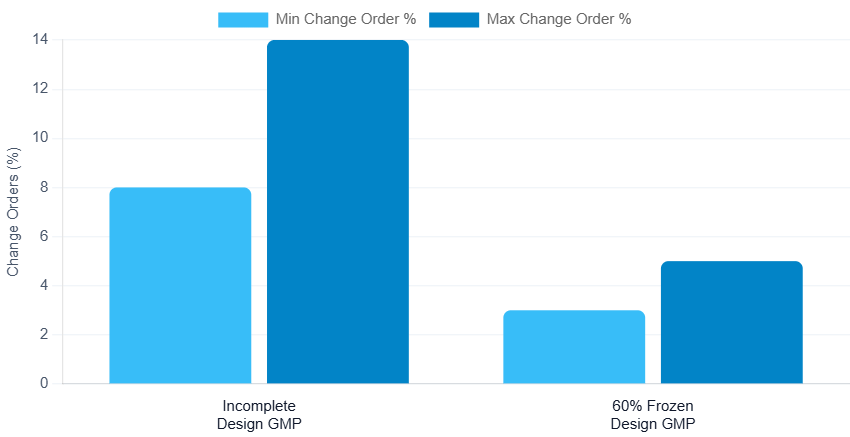
Guaranteed maximum price contracts signed against incomplete design have produced change orders of 8 to 14 percent on data center projects. Contracts where design is frozen at around 60 percent completion produce 3 to 5 percent. Delay liquidated damages in data center agreements run 0.1 to 0.5 percent of contract value per day with caps of 5 to 10 percent, against caps of 10 to 20 percent in the wider capital projects market.
Procurement sits between design and construction in the data center development sequence.
It is the stage where engineering specifications become purchase orders, vendor contracts, and delivery dates.
On most large projects it is also the stage that determines when the facility energizes.
The reason is straightforward. Construction speed has not changed much. Equipment lead times have.
A team can hold every civil and structural milestone and still wait a year for a transformer, and no amount of site productivity recovers that time.
The order date sets the delivery date before the first crew mobilizes.
The second half of this stage is contractual. The equipment schedule creates risk, and the contract decides who carries it.
Delivery models, pricing structures, and damages provisions allocate the consequences of a slip before anyone knows whether one will occur.
The four procurement decisions that set the timeline
Long-lead equipment. Transformers, switchgear, generators, and cooling systems often drive data center schedules.
Large power transformers above 50 MVA can take 128–160 weeks, while Tier-1 manufacturers quote 48–60 months, with backlogs into 2030. Tier-2 producers typically quote 24–36 months.
Medium-voltage switchgear takes 44–84 weeks, diesel generators 50–110 weeks, and behind-the-meter gas turbines 36–84 months.
Vendor strategy. The choice is between sole-source and multi-vendor procurement, and between bespoke and standardized designs across a portfolio.
Sole-sourcing improves commercial terms and removes the substitution option if that manufacturer slips.
Multi-vendor procurement requires performance-based specifications, written by voltage class, fault rating, and footprint, so several approved manufacturers can bid the scope.
The EPC contract. Design-build and EPC together account for roughly 70 percent of hyperscale project starts. EPC concentrates schedule and performance responsibility with one contractor.
Design-build keeps more design oversight with the owner and often leaves long-lead equipment for the owner to buy directly.
EPCM, more common internationally, makes the owner the direct counterparty to every vendor.
Contract structure and risk allocation. Fixed-price, cost-plus, and guaranteed maximum price contracts distribute cost and schedule exposure differently, and the choice usually follows design maturity.
Guaranteed maximum price contracts signed against incomplete design have produced change orders of 8 to 14 percent, against 3 to 5 percent where design is frozen at around 60 percent completion.
Why equipment lead time is the binding constraint
Three mechanics explain why the equipment schedule governs the project schedule.
The first is that the manufacturing clock frequently does not start when the purchase order is issued.
On many packages it starts at approved submittal or at Release to Manufacture.
A purchase order placed in January with Release to Manufacture held until April has lost twelve weeks before fabrication begins. A single blended lead-time figure hides this.
Purchase order date, submittal approval, Release to Manufacture, factory slot confirmation, factory acceptance test, ship date, and site-need date each need separate monitoring.
The second is that ordering can begin before design is complete.
High-voltage transformers and switchgear typically need ratings frozen only at roughly 60 percent single-line design completion.
Reserving a factory slot with a deposit of 10 to 30 percent of equipment cost at land close is now standard on hyperscale campuses, with the order date preceding groundbreaking by six to twelve months.
Without a reserved slot, nominal lead times extend by another eight to sixteen weeks.
The third is supply concentration. A small group of manufacturers dominates the categories that gate delivery.
Two to three global producers control the high-voltage transformer market, constrained by grain-oriented electrical steel supply, and there is no fast substitute.
Vertiv, Eaton, and Schneider Electric sit across power distribution, uninterruptible supply, switchgear, and cooling.
Qualifying a second manufacturer in every critical category, and writing specifications by configuration, preserves the option to move when a primary vendor slips.
Contract structures and who carries the risk

Two provisions do most of the work inside these structures.
Delay liquidated damages set a daily rate for late completion, commonly 0.1 to 0.5 percent of contract value per day in data center agreements, capped at 5 to 10 percent.
The wider capital projects market runs caps of 10 to 20 percent.
Delay damages and performance damages belong in separate provisions with separate caps, triggered by defined milestones such as mechanical completion.
Force majeure and change-in-law provisions allocate the delays nobody controls.
Current drafting practice enumerates the foreseeable categories explicitly, including equipment lead-time delays, interconnection delays, permitting delays, and tariffs.
These provisions need coordinating across the supply agreements, the construction contract, and the financing documents, so a declaration in one does not create a default in another.
Where the owner orders equipment early and novates the purchase order to the contractor, two mismatches appear.
The vendor damages cap is set against equipment value while the prime contract cap is set against project value.
Vendor warranties often begin at shipment and can expire before the equipment is energized.
Both are addressed by drafting the original purchase order for eventual novation.
What one-month costs
A one-month delay on a 60 MW AI data center has been costed at roughly $14.2 million dollars, covering lost lease revenue, idle labour, and penalty exposure.
That figure explains the behaviour on both sides of the table.
Owners press for wide liquidated damages coverage. Contractors press equally hard for caps.
It also explains why deposits placed years ahead of delivery are now treated as ordinary project cost.
Against a monthly delay cost in the tens of millions, a slot reservation deposit is cheap.

Strategic implications
For developers. Order the long-lead equipment first. The order goes out at land close, six to twelve months before groundbreaking, using ratings frozen at roughly 60 percent single-line design completion.
Specify by configuration so several manufacturers can bid the package and get the factory slot confirmed in writing.
For investors. Ask when the long-lead equipment was ordered and what the Release to Manufacture date is. A purchase order date alone proves little, because fabrication often begins a full quarter later.
A late order is a slipped delivery date the pro forma has not caught up to yet.
For operators. The vendors selected here define the maintenance regime, the spares inventory, and the reliability profile for the life of the asset.
Standardization cuts spares holding and simplifies training.
Multi-sourcing adds resilience at procurement and complexity at operation.
Key takeaway
Construction gets the attention, but procurement sets the date.
The developer who orders early controls the timeline. The one who orders late discovers it is already lost.
Equipment scarcity has moved the first meaningful milestone of a data center programme from groundbreaking to the purchase order.
Everything downstream, including the financing schedule, the lease commencement date, and the tenant fit-out plan, now depends on a manufacturing slot that was allocated years earlier.
The projects delivering in 2029 were ordered in 2025 and 2026.
Capacity beyond that is being allocated now.
On your projects, what is the long-lead item that most often controls the schedule and how early do you now commit to it?
Part 12 examines what a data center actually costs and the drivers that move it: What a Data Center Actually Costs: CapEx Breakdown and the Drivers That Move It