
Welcome to Global Data Center Hub. Join investors, operators, and innovators reading to stay ahead of the latest trends in the data center sector in developed and emerging markets globally.
AI data centers are not mispriced due to lack of enthusiasm, but because many still underwrite them as upgraded colocation instead of compute infrastructure with industrial risk. That misframing drives valuation errors.
Traditional facilities can tolerate weak density, slow ramp, and legacy cooling. GPU-dense environments cannot. Mistakes quickly surface as stranded power, underutilized clusters, thermal limits, contract mismatches, and rapid hardware depreciation.
The market is shifting to compute-first underwriting, where value lies in reliable, billable GPU capacity, not just powered space. That is why GPU density now sits at the center of the investment case.
This mispricing dynamic reflects a broader gap between perceived and actual risk in the sector, as outlined in What Most Investors Misprice in Data Centers.
The underwriting model has changed
Legacy data center underwriting focused on location, connectivity, lease terms, and occupancy. AI infrastructure requires a new sequence: power availability first, cooling architecture second, hardware economics third, and customer contracts across all three.
In GPU-dense environments, value shifts from the real estate shell to the compute stack. GPUs, servers, cooling systems, interconnects, and power distribution determine whether the facility can deliver the workloads it’s designed for. If density cannot be achieved, the asset is economically impaired.
Many models still fall short by treating AI racks as incremental upgrades rather than a different class of asset. A 5–10 kW rack can be financed as digital real estate, but 40–130 kW racks must be underwritten as power- and heat-constrained infrastructure with embedded technology risk.
GPU density is the investable denominator
The key lens is GPUs per megawatt of IT load and the revenue that capacity can generate after accounting for utilization, downtime, and contract structure. This is the benchmark investors should use for evaluating performance.
A dense H100 deployment can support roughly 800 GPUs per MW, implying that a 100 MW facility could host around 80,000 GPUs. However, installed capacity does not equal billable capacity, and the gap between the two determines whether returns align with infrastructure-like yields or venture-like volatility.
Effective underwriting requires translating nameplate capacity into revenue capacity by adjusting for utilization rates, pricing models, contract types, and hardware competitiveness over time. These factors determine how much of the installed base converts into durable cash flow.
In this context, GPU density is not just an engineering metric. It is the link between physical design and financial performance, shaping both risk exposure and return potential.
Revenue is earned per GPU-hour, not per rack
GPU infrastructure is monetized through revenue per GPU-hour and sustained utilization, rather than rent per square foot. This shifts the investment focus from physical space to how effectively compute capacity is contracted and deployed.
Two facilities with similar megawatt capacity can produce very different outcomes depending on contract structure. Long-term, take-or-pay agreements provide predictable cash flows, while on-demand workloads introduce pricing volatility and uncertain utilization.
This difference has direct implications for risk and financing. Reserved capacity supports stability and leverage, whereas flexible demand requires careful underwriting of utilization variability and revenue consistency.
A complete model must distinguish between theoretical, contracted, and realized revenue, while adjusting for downtime and inefficiencies. Net billable capacity is typically below nameplate, and that gap is a key driver of actual performance.
Utilization is the variable that breaks the deal
The market often focuses on GPU scarcity, but the more critical issue is GPU idleness. Idle GPUs generate no revenue while still consuming capital, power, and depreciation, making utilization the most sensitive driver in the model.
High capex can be justified under strong utilization and disciplined pricing, but performance deteriorates quickly if utilization drops, pricing resets, or demand proves more cyclical than expected. Sustained returns depend on keeping capacity consistently rented at economically viable rates.
Counterparty structure adds another layer of risk. The immediate tenant may not reflect true demand stability, especially when long-term compute commitments are paired with shorter downstream contracts, creating a duration mismatch between obligations and revenue.
This dynamic introduces classic infrastructure risk within a growth equity wrapper. Without careful diligence on demand durability and contract alignment, utilization risk can undermine both cash flow stability and long-term returns.
This exposure to utilization volatility and contract misalignment reflects the broader demand-risk dynamics explored in Is ByteDance’s 500MW China Deal the New AI Infrastructure Playbook?.
Obsolescence is not a side case. It is the case.
The most common mistake in GPU underwriting is treating depreciation as an accounting assumption rather than an economic reality. GPU fleets do not behave like traditional real estate assets, as their value is reset by new architectures and shifting performance benchmarks.
As release cycles accelerate, the useful economic life of hardware shortens, making residual value one of the most sensitive variables in the model. Investors must account for faster obsolescence and avoid overly optimistic lifespan assumptions.
This has direct implications for capital structure. Debt terms, advance rates, and amortization schedules must align with actual technology cycles, while incorporating mechanisms for hardware refresh and value uncertainty.
When underwriting assumes infrastructure-like stability but the assets behave like rapidly depreciating technology, the capital stack becomes misaligned from the start, exposing the investment to structural risk.
Power and cooling now determine strategic relevance
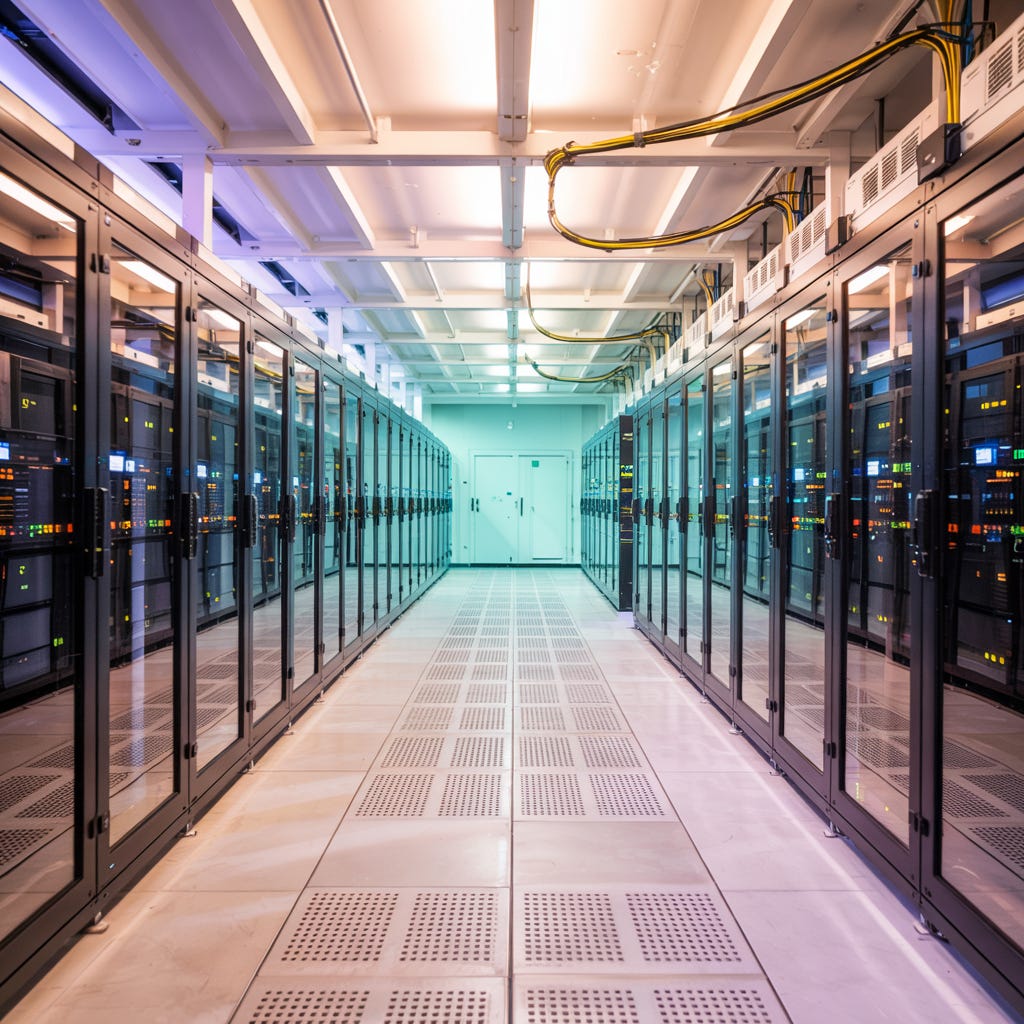
In conventional data center investing, power is important. In AI infrastructure, power is the gating asset.
The ability to secure deliverable power at the density required by current and next-generation hardware now determines which projects are fundable, which markets remain relevant, and which facilities will become obsolete faster than their sponsors expect.
Cooling carries the same weight. Air-cooled facilities can stretch only so far. Once rack densities move beyond the practical limits of legacy air systems, liquid-ready infrastructure stops being a premium feature and becomes a minimum threshold for institutional relevance.
This impacts development sequencing. Investors should assess utilities, timelines, cooling, distribution, and retrofit flexibility upfront. Facilities that cannot adapt to future hardware risk becoming stranded.
The financing market is adjusting
The financing market has started to absorb these realities. GPU-backed debt, structured equipment finance, project-level offtake underwriting, and hybrid capital stacks are emerging because conventional real estate finance does not fully fit the asset.
That is a healthy development, but it introduces another layer of diligence. Investors now need to evaluate not only the operating asset, but also the interaction between the hardware collateral, the customer contracts, the facility lease, and any SPV structures supporting the build. If one layer breaks, the stress can cascade through the rest of the stack.
That means the right question is no longer simply whether the project is financed. It is whether the risk has been allocated to the right capital layer, on the right timeline, with the right cure rights and collateral protections.
What disciplined underwriting looks like
A disciplined GPU density underwriting framework starts with six core questions that shift the focus from the asset shell to the compute stack. Investors must assess whether the site can deliver the required power density today, scale with future hardware, and support it with the right cooling architecture.
The analysis then moves to financial reality. This means understanding the true revenue profile after adjusting for contract mix, billable efficiency, and utilization risk, while also evaluating counterparty strength across its downstream exposure and funding resilience.
Finally, underwriting must align technology with capital structure. Hardware life should be conservatively modeled, and the capital stack must amortize accordingly rather than depend on refinancing against declining assets.
The investor lesson
GPU density is not a technical detail to append to a conventional data center memo. It is the core variable that determines whether an AI data center behaves like a durable infrastructure asset or a short-cycle, capital-intensive compute platform with hidden refinancing risk.
The projects that will outperform are not simply the densest. They are the ones where density, power, cooling, contracts, and capital structure have been sequenced correctly.
That is the new underwriting standard. Investors who continue to evaluate AI data centers as upgraded colocation will misread both risk and return. Investors who underwrite them as compute infrastructure will be better positioned to allocate capital into one of the most consequential infrastructure buildouts of this decade.
Well, missing is the RAS issues being scaled, and that only the shell is Tier 4, the racks, the GPUs are running Tier 0 or worse. You can have all the power and cooling in the world, but when the O-rings in the quick disconnects break off and form fragments that clog the cold plate internal fins, leaks shut down the GPU blades. This is idle without power, but often leads to scrapped $300,000 blades. Allocation means you cannot just replace. The liquid metal TIM is pumping out and causing damage to other components. I can keep going, the worst part is, you go to a CE engineer at Microsoft, and they say "not interested.". You go to Meta, and they say "we don't care, we just replace the racks, up to $66 million without any approval needed". When I ask if the CIO or CISO cares about lost RSA data, they sort of wake up...slowly.