
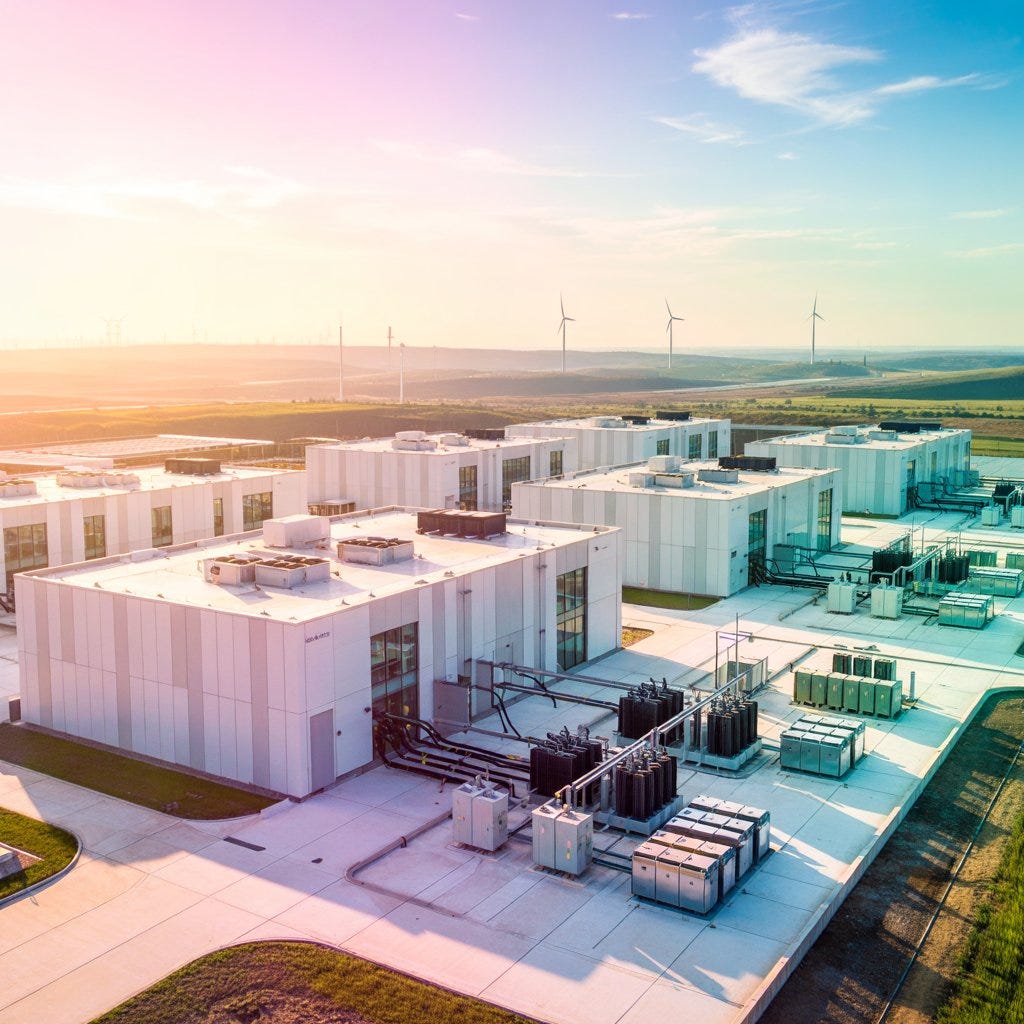
Welcome to Global Data Center Hub. Join investors, operators, and innovators reading to stay ahead of the latest trends in the data center sector in developed and emerging markets globally.
Why This Year Mattered
There are years when an industry grows incrementally, and years when its underlying logic changes. This was the latter for data centers.
What once sat quietly at the intersection of real estate and IT infrastructure moved decisively into the realm of strategic assets.
Data centers were no longer evaluated primarily on uptime, PUE, or yield stability.
They were redefined by their proximity to power, control over energy inputs, and relevance to national AI ambitions.
Over the course of the year, Global Data Center Hub’s coverage tracked and increasingly anticipated this shift. The focus moved from capacity expansion to system-level constraints: power availability, grid access, thermal limits, supply chains, and capital structures.
AI did not simply increase demand; it re-ordered priorities.
AI’s shift from software scaling to physical infrastructure constraint is explored in AI’s Next Phase Is Being Built, Not Coded.
The result was a reframing of what “advantage” means in digital infrastructure.
The Macro Themes That Defined the Year
1. Power Became the Binding Constraint
Early in the year, it became clear that capital was no longer the limiting factor. Money was abundant. Land was often available. What was scarce and increasingly decisive was firm, dispatchable power.
Several pieces explored how developers and investors were arbitraging renewable energy dynamics, repositioning sites around grid access, and prioritizing markets with credible pathways to gigawatt-scale power delivery. The narrative shifted from “where demand will grow” to “where power can realistically be secured.”
This was not a cyclical issue. It was structural. AI workloads changed load profiles, density requirements, and cooling assumptions, making prior grid planning models obsolete.
2. AI Forced a Rethink of the Data Center Itself
AI did not just increase rack density; it challenged the physical and economic design of facilities.
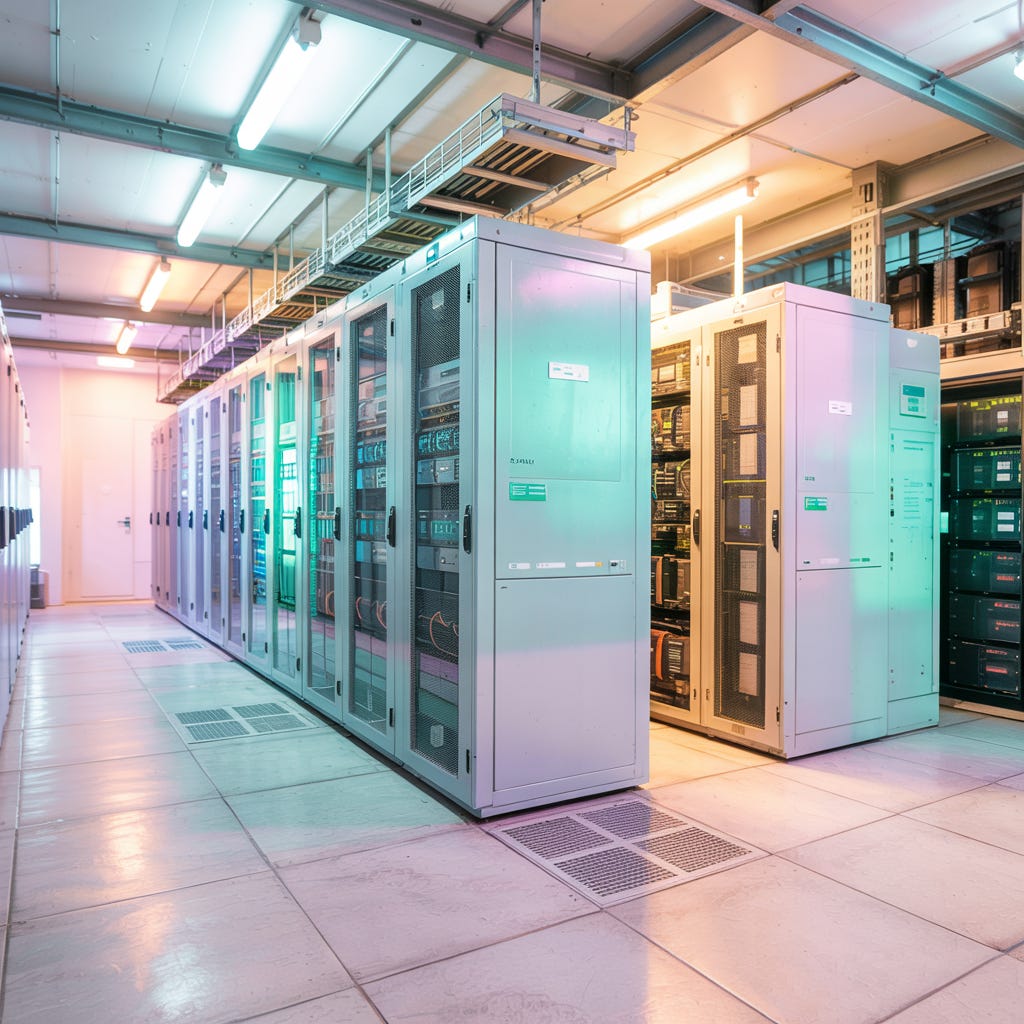
Coverage increasingly focused on thermal management, electrical systems, and component suppliers signaling that value was migrating down the stack. Power distribution, cooling technology, and electrical equipment manufacturers emerged as critical enablers, not ancillary vendors.
This marked a shift away from treating data centers as standardized shells. They became bespoke infrastructure, tuned to specific workloads, power characteristics, and latency requirements.
3. Geography Reasserted Itself
One of the most consistent threads through the year was the divergence between Tier 1 markets and the next wave of capacity locations.
Rather than a simple expansion outward, the analysis highlighted a more selective pattern: capital flowing to markets that combined energy availability, regulatory clarity, and geopolitical alignment. Some traditionally “secondary” markets gained strategic importance, while others stalled due to grid congestion or policy friction.
This reframing mattered for investors. Market selection was no longer about yield compression versus growth upside; it was about execution risk and time-to-power.
4. Capital Structures Evolved Quietly but Significantly
While headlines focused on megawatt announcements, a quieter evolution was underway in how projects were financed.
The year’s coverage pointed to a growing bifurcation between project finance models and balance-sheet-driven platforms, particularly for AI-oriented builds. Large sponsors increasingly favored structures that compressed risk, secured long-term power, and aligned with hyperscaler demand even at the expense of near-term returns.
Why balance-sheet control is displacing project finance is unpacked in Build or Lease? Inside the Billion-Dollar Dilemma Reshaping AI Infrastructure.
This was not financial engineering for its own sake. It reflected a market recalibrating around certainty and control.
Key Inflection Points in Thinking
Several moments across the year marked a clear shift in how the sector was being analyzed.
One inflection point came when AI was framed not as “incremental demand,” but as a fundamentally different power load. That framing clarified why grid timelines, not capital deployment, became the dominant bottleneck.
Another came with deeper examination of energy arbitrage strategies. Rather than treating renewables as a sustainability overlay, the analysis positioned energy sourcing as a core competitive lever one that could materially alter project economics and viability.
Finally, attention to suppliers particularly in electrical and thermal systems signaled recognition that the value chain was reorganizing. The data center was no longer the sole focal point; its enabling infrastructure mattered just as much.
What Surprised Us
The speed at which consensus shifted was striking.
At the beginning of the year, many conversations still revolved around capacity expansion and lease-up velocity. By year’s end, senior investors and policymakers were asking harder questions: Where will the power come from? Who controls it? And how long will it take?
Another surprise was how quickly geopolitics entered the discussion. AI infrastructure became entangled with sovereignty, industrial policy, and national competitiveness far faster than many anticipated. Data centers stopped being neutral assets; they became strategic ones.
Finally, the market’s willingness to accept lower initial returns in exchange for execution certainty signaled a deeper change in risk perception.
What We Underestimated
If there was a miss, it was underestimating how rapidly the supporting ecosystem would become central.
Electrical equipment suppliers, cooling technology firms, and grid-facing infrastructure providers moved from the periphery to the core of the investment thesis faster than expected. Their constraints increasingly set the pace for deployment.
There was also a tendency early on to view regulatory friction as localized. Over time, it became clear that permitting, interconnection, and policy alignment would be decisive across multiple regions, not just a few constrained markets.
Looking Ahead
If this year was about recognizing constraints, the coming year will be about navigating them.
The questions ahead are less about whether AI demand will persist it will and more about who can execute under real-world limitations. Power procurement, grid integration, and regulatory strategy will separate theoretical capacity from deployable infrastructure.
For investors and policymakers alike, the lesson is clear: data centers are no longer passive beneficiaries of growth. They are instruments of strategy.
The past year marked the end of a simpler era. What follows will reward those who understand not just where demand is headed, but how the system supporting it actually works.