
Welcome to Global Data Center Hub. Join investors, operators, and innovators reading to stay ahead of the latest trends in the data center sector in developed and emerging markets globally.
The Chile Market Reorganized Its Barriers In Six Months
The structural signal in Chile is not market growth.
It is that the Chilean data center market restructured its barriers to entry inside a six-month window.
Mainstream coverage still reads Chile as a growth story measured in market value and installed megawatts.
The growth is real. It is not the signal.
The signal is that Chile is no longer a market that any developer with capital and a site can enter.
Two events closed the door.
Santiago vacancy collapsed in the second half of 2025.
The Environmental Evaluation Service codified binding cooling and permitting standards in February 2026. The market did the sorting itself.
Santiago Vacancy Collapse Is A Demand Signal, Not A Cycle
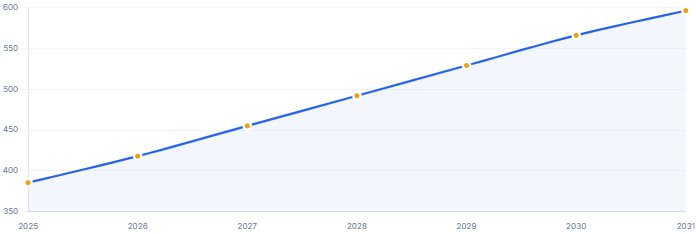
During the second half of 2025, operational capacity in Santiago rose from 182 MW to 279 MW. That capacity was absorbed almost immediately.
Vacancy rates dropped from 23.4 percent to 4.3 percent. Available inventory fell to 7.9 MW across the entire market, with the largest single contiguous block at 5 MW.
Capacity under construction reached 106 MW. Planned pipeline capacity reached 275 MW, up from 79 MW in the first half of the year. This is not retail colocation churn.
Wholesale and hyperscale demand is projected to capture 73.98 percent of total colocation investment by 2031.
AWS, Microsoft, and Google have committed over $8 billion in Chile capital from 2025 forward, transitioning from distributed facilities to campuses of 30 to 50 MW.
Demand of this composition does not reverse on a cycle. It compounds.
The forward consequence is direct.
Capacity for 2027 and 2028 delivery is being priced and pre-positioned now, while inventory is effectively zero.
The 2026 SEIA Guidelines Raised The Capital Floor For Entry
On February 25, 2026, the Environmental Evaluation Service published binding criteria for data center evaluation within the Environmental Impact Assessment System.
The criteria establish dry cooling, closed-loop chilled water, and advanced liquid cooling as the baseline for securing favorable environmental resolutions.
Traditional wet cooling is no longer a viable permitting path in Central Chile.
Diesel storage at or above 1,000 tons triggers mandatory SEIA evaluation.
Atmospheric emissions and noise from generator testing must be modeled. Climate resiliency must be demonstrated against long-term regional projections.
Each requirement is a fixed cost incurred at the design phase. A single-asset developer absorbs the full engineering, legal, and consulting cost on one building. A platform amortizes the same cost across multiple projects.
Permitting cycles compound the effect, running 12 to 18 months for Environmental Impact Statements, up to 8 months for municipal building permits, and up to 18 months for archaeological survey permits.
The SEIA codification did not slow the market. It screened a tier of thinly capitalized developers out of it.
The SEIA codification did not slow the market. It screened thinly capitalized developers out, the way hidden constraints increasingly reorder emerging-market AI infrastructure.
The Entry Window Is Aligned To Infrastructure, Not Sentiment
Two infrastructure events anchor the demand wave. The Humboldt Connect subsea cable, linking Valparaíso to Sydney, is expected to begin commercial operations in the fourth quarter of 2026.
AWS’s three-availability-zone Chile region is operational by the second half of 2026.
The 2027 to 2028 delivery window is the one that catches third-party demand after both go live. The market’s demand wave has a date.
The forward consequence is a narrow entry window. Land, secured power, and permits in motion must be set in 2026 to deliver capacity into 2028. Positions taken later miss the wave.
Terranova’s confirmed 2027 to 2028 Chile entry sits precisely inside this window, which is why it functions as the test case for whether a well-capitalized entrant can still clear the reorganized bar.
Investor Action
Private equity and credit investors underwriting Chilean digital infrastructure must shift the diligence question from market sizing to entry position. The relevant question is no longer whether Chile is growing.
It is whether a specific position can clear the 2026 SEIA permitting path and deliver inside the 2027 to 2028 window. Evaluate every Chile opportunity against secured power, a compliant cooling design, and permits already in motion.
The cost of inaction is committing capital to a site without those three elements and absorbing a 24-to-30-month stall while design and permitting align with the codified baseline.
Public equity investors holding listed colocation or hyperscale operators with Chile exposure should benchmark whether each operator’s footprint pre-dates or post-dates the SEIA codification.
Operators carrying wet-cooling legacy assets face retrofit cost or stranded-capacity risk as the regulatory baseline tightens around them. Operators with compliant capacity inside a 4.3 percent vacancy market hold pricing power the financials may not yet reflect.
The cost of inaction is holding a position through a margin or write-down cycle that the reported numbers have not yet surfaced.
Operators evaluating build-versus-buy decisions for Chilean capacity face a moved calculus. Acquiring a compliant operating position now may outperform a greenfield build that cannot clear permitting before the demand window closes.
Operators weighing build versus buy for Chilean capacity face a moved calculus. A compliant position acquired now may outperform a greenfield build that stalls in permitting the infrastructure misalignment that collapses data center deals.
The Verdict
Chile is the template for how an emerging data center market behaves.
A demand inversion and a regulatory codification arrived within six months of each other and raised the capital and capability floor together.
The market no longer rewards speed or cheap land.
It rewards capital depth, compliant design, and an entry position set before the window narrows.
Terranova’s confirmed 2027 to 2028 entry is the live test of whether a late but well-capitalized platform can still clear that bar.
The forward question is which Latin American market reorganizes next on the same two-signal pattern.
Colombia, Peru, and Mexico are the candidates where vacancy is tightening, and regulators are studying Chile’s PDATA precedent.
The market that codifies its cooling baseline first will close its door the same way Chile just did.
Your point that Chile reorganized its barriers to entry in six months, vacancy collapse plus the February SEIA cooling baseline, is exactly the dynamic I think the rest of LatAm should study, because the winners of the physical AI buildout will be the jurisdictions that codify rules early rather than debate them late. I just published a piece arguing Brazil and the region can still win the infrastructure layer of AI (energy, water, minerals) even if they never win the model layer, and your Chile case is the cautionary template: https://thiagopedicosaragiotto.substack.com/p/the-physical-layer-of-ai-why-latam
Curious what you think this means for the US. We've got the tight-vacancy part already, but cooling and water rules are all over the place state to state — nothing like one national standard the way Chile just did with SEIA. So does the sorting here happen the same way, or does it just play out through interconnection queues and water fights instead?